Cute Zoo Animals Coloring Scene: Graphics & Illustrations
First Impression: Playful, Warm, and Instantly Recognizable
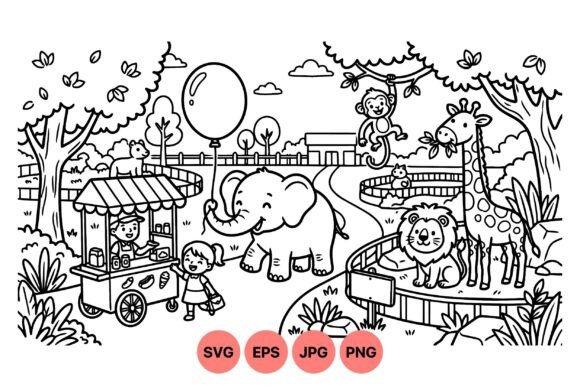
Opening Cute Zoo Animals Coloring Scene feels like flipping to the most inviting page of a well-loved children’s activity book—except it’s built for real-world publishing. What greets you is a lively black-and-white zoo scene: a smiling girl at a snack cart, an elephant lifting its trunk, a monkey swinging mid-air, a lion lounging with quiet charm, and a giraffe stretching toward leafy branches. There’s no clutter, no visual noise—just joyful, balanced composition and expressive line work. It reads as playful, educational, and lifestyle-focused, with subtle warmth that builds instant reader trust. This isn’t clipart—it’s a considered graphic design asset crafted for editorial clarity and emotional resonance.
Where This Illustration Fits Naturally in Your Content Ecosystem
Cute Zoo Animals Coloring Scene thrives where personality meets purpose. Think blog posts about early childhood learning, summer camp planning, homeschool printables, or family-friendly travel guides. It also elevates affiliate content around kids’ art supplies, eco-friendly coloring books, or educational subscription boxes. As a digital download, it slots seamlessly into your workflow for:
- Blog featured images that stop scrollers mid-feed
- Pinterest pins optimized for high CTR—especially in parenting, education, and creative lifestyle niches
- Digital guides and lead magnets (e.g., “50 Printable Zoo Activities for Preschoolers”)
- Newsletter headers that reinforce brand friendliness without sacrificing polish
- Category thumbnails on resource-rich websites—think “Free Printables” or “Learning Through Play”
- Canva templates for educators and small business branding kits
- Social media graphics for Instagram carousels or Facebook community posts
Why It Strengthens Editorial Design and Website Presentation
In editorial design, consistency is credibility. Cute Zoo Animals Coloring Scene delivers strong visual hierarchy out of the box—the central snack cart anchors the eye, while animal poses create natural movement and flow. That makes it ideal for website headers or article thumbnails where readers decide in under two seconds whether to click. Its cheerful tone reinforces approachability, which directly supports reader trust—especially for online educators and affiliate marketers building authority through relatable, human-centered content. Used across downloadable resources, it creates a cohesive brand identity: not corporate sterile, but intentionally warm, inclusive, and thoughtfully illustrated.
Best Places to Deploy This Graphic Design Asset
This illustration shines brightest where mood and message align. Use it as:
- A hero image above a blog post on “Zoo-Themed Learning Activities”
- A Pinterest pin thumbnail with bold, centered text overlay (“Free Zoo Coloring Page!”)
- An editorial accent beside a short paragraph in a digital guide about sensory play
- A content upgrade banner on a landing page for a printable pack
- A category visual in a resource library—replacing generic stock icons
- A newsletter header that signals creativity and care before the first word is read
- A social media preview image for a new Canva template launch
Where to Proceed Thoughtfully
While versatile, Cute Zoo Animals Coloring Scene isn’t universally scalable. Avoid using it as a tiny mobile thumbnail—it loses expressive detail and becomes indistinct. Steer clear in text-dense blog graphics where fine linework competes with body copy. It’s also less effective against low-contrast backgrounds (e.g., light gray or pastel washes) unless you add a subtle drop shadow or solid white frame. And while charming, it doesn’t suit serious professional niches—think legal blogs, fintech dashboards, or B2B SaaS landing pages—where minimalist, data-forward visuals are expected. If your site runs a strict monochrome or ultra-minimal visual system, this illustration may feel tonally dissonant without thoughtful framing.
Publisher Notes You’ll Actually Use
Before embedding Cute Zoo Animals Coloring Scene into live content, run these quick checks:
- Preview it on both desktop and mobile—does the focal point hold up at 320px width?
- Drop it into your actual blog layout mockup—not just a blank canvas—to test spacing and rhythm
- Overlay headline text in your primary font: Does contrast remain legible? Try serif, sans serif, script, and display typefaces to see what harmonizes best
- Convert it to grayscale—does the linework retain depth and separation? (Critical for accessibility and print-ready use)
- Verify file size—optimize for web performance without sacrificing crispness; aim for under 250KB for featured images
- Confirm commercial license terms—especially if deploying in monetized newsletters, affiliate product pages, or paid digital products
A Final Word for Bloggers, Educators, and Creative Entrepreneurs
As someone who’s shipped hundreds of blog graphics, editorial layouts, and digital downloads, I can say this: Cute Zoo Animals Coloring Scene stands out because it balances artistic intention with functional flexibility. It’s not just another illustration—it’s a strategic design asset that helps content creators communicate warmth, competence, and care—without saying a word. Whether you’re designing a lead magnet for preschool teachers, refreshing your website header for a seasonal campaign, or building a Canva template suite for creative entrepreneurs, this piece adds tangible value. It supports content marketing that converts, affiliate marketing that feels authentic, and digital products that readers genuinely want to download, print, and share. In a crowded creative marketplace, that kind of quiet impact is rare—and worth every pixel.