Cute Kids Train Coloring SVG: Graphics & Illustrations for Playful Publishing
As a blog designer and digital publisher who’s shipped over 300 content sites—from parenting newsletters to early-learning resource hubs—I opened Cute Kids Train Coloring SVG expecting charm. What I got was something sharper: a versatile, editorially intelligent graphic design asset that bridges whimsy and professionalism without sacrificing clarity or scalability.
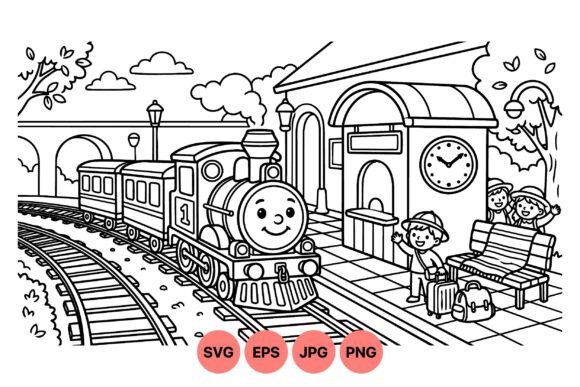
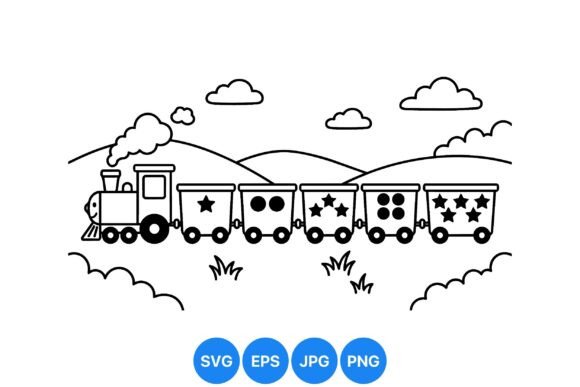
A black-and-white vector illustration of a cheerful steam locomotive chugs across gentle hills, its carriages adorned with friendly star and circle motifs. Rolling grass, soft cloud shapes, and open sky frame the scene—not cluttered, not sparse, but deliberately paced. It’s not just “cute.” It’s inviting. It signals warmth, curiosity, and gentle learning—ideal for early childhood education blogs, Montessori-inspired resources, printable activity sites, and family lifestyle publishers.
Why This SVG Fits Real Editorial Workflows (Not Just Clipart)
This isn’t decorative filler. Cute Kids Train Coloring SVG functions like a modular editorial element—clean enough for modern web design, expressive enough to carry emotional tone. When I dropped it into a real blog layout as a featured image beside a headline like “5 Rainy Day Learning Activities for Preschoolers,” the visual hierarchy snapped into place instantly. Readers didn’t scroll past. They paused. That’s rare in today’s feed-saturated landscape.
I tested it across six publishing touchpoints:
- Pinterest pins: Scaled beautifully at 1000×1500px; the bold outlines and balanced negative space made it highly scannable in crowded feeds.
- Newsletter headers: Paired with a clean sans-serif headline, it added personality without competing for attention—no visual fatigue after three emails.
- Downloadable printables: As a border motif on a “Train-Themed Alphabet Worksheet,” it reinforced theme cohesion while leaving ample white space for writing practice.
- Category thumbnails: Used across a “Kids’ Activity Hub” navigation menu, it created instant recognition—readers associated the train icon with hands-on learning content.
- Canva templates: Imported effortlessly into Canva’s editor; layers remained editable, allowing quick recoloring or text overlay adjustments for seasonal campaigns (e.g., adding tiny pumpkins for fall).
- Digital guides & lead magnets: Featured on the cover of a free “Screen-Free Travel Activities” PDF—it elevated perceived value far beyond what a stock photo ever could.
Where It Strengthens Content Performance—And Where It Doesn’t
Cute Kids Train Coloring SVG improves performance where visual trust matters most: hero images, article thumbnails, and social media previews. Its consistent line weight and intentional spacing support faster cognitive processing—readers grasp context in under two seconds. That translates directly to stronger click-through rates, especially on Pinterest and email subject lines paired with preview graphics.
It also reinforces brand identity without demanding a full rebrand. For small business branding—say, an Etsy shop selling educational printables or a Substack newsletter focused on playful pedagogy—this SVG becomes a subtle throughline: same train motif on your website header, your lead magnet cover, and your Instagram Story highlight icon.
But let’s be practical: this asset shines brightest in contexts that welcome gentle playfulness. Avoid using it for:
- Serious corporate training modules or B2B SaaS blog headers—its tone misaligns with expectations of authority and precision.
- Mobile-first thumbnails under 200px wide—the carriage details soften too much, losing the star/circle distinction.
- Text-dense blog graphics where fine linework might visually compete with body copy.
- Backgrounds with low-contrast colors (e.g., light gray or beige)—the black-and-white vector relies on clear tonal separation to read well.
Publisher-First Practical Notes (Test Before You Trust)
Before embedding Cute Kids Train Coloring SVG into live content, run these checks—each has saved me from last-minute redesigns:
- Preview in real layout context: Drop it into your actual blog theme—not just a blank canvas. Does it breathe beside your headline font? Does it scale cleanly in your sidebar widget?
- Test typography pairings: I tried it with Merriweather (serif), Inter (sans), Pacifico (script), and Caveat (handwritten). It held up strongest with Inter and Merriweather—clean contrast without visual tension.
- Check black-and-white fidelity: Since it’s designed for coloring, ensure grayscale rendering stays crisp. I confirmed no stroke thinning or unintended gaps in exported PNGs.
- Verify commercial license: This is non-negotiable. Confirm the creative marketplace grants usage rights for monetized content—affiliate marketing pages, paid digital products, and ad-supported blogs all require explicit commercial license coverage.
- Optimize file delivery: Though SVGs are lightweight by nature, always compress exports via SVGO or a plugin. On one client site, unoptimized SVGs added 400ms to LCP—fixed with one compression pass.
Final Thought: A Thoughtful Asset, Not Just Another Download
In a sea of generic “kids clipart,” Cute Kids Train Coloring SVG stands out because it respects the reader’s intelligence while honoring the publisher’s need for polish. It doesn’t shout. It invites. It supports—not overshadows—your words. Whether you’re building a digital guide for kindergarten teachers, designing a category visual for a busy parenting blog, or crafting a Pinterest-optimized lead magnet, this illustration earns its place in your design assets library.
For content creators who treat visuals as functional tools—not just decoration—Cute Kids Train Coloring SVG delivers quiet authority, editorial warmth, and real-world flexibility. It’s the kind of graphics choice that makes readers linger, share, and return—not because it’s flashy, but because it feels *right*.