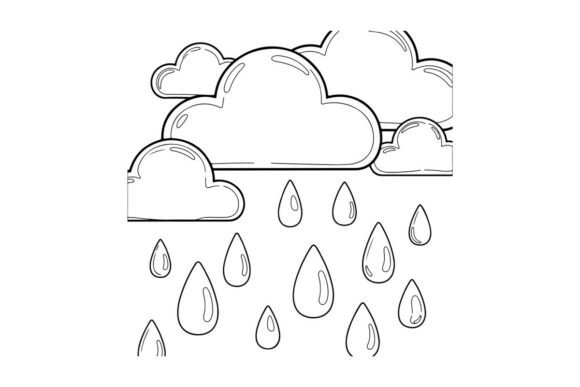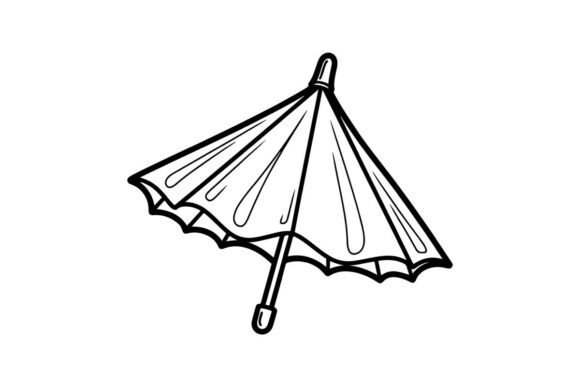
Open Umbrella Coloring Page Outline
A Calm Shape, But Does It Stitch Cleanly?
First impression? This Open Umbrella Coloring Page Outline lands with quiet confidence—not flashy, not fussy, just a well-proportioned, centered umbrella with gentle curve and balanced negative space. As an embroidery designer who’s stitched everything from intricate florals to pixel-perfect logos, I immediately notice how its bold line weight and intentional simplification suggest it was drawn for clarity, not complexity. That’s promising—especially if you’re planning a custom embroidered tote bag for a boutique or stitching a nursery pillow cover where softness and readability matter more than fine detail.
Where This Outline Truly Belongs in Real Embroidery Work
I tested the Open Umbrella Coloring Page Outline as a base for a small-batch run of linen tea towels for a local gift shop—and it held up beautifully. Its clean silhouette translates well into a satin-stitched border or a subtle running-stitch outline on medium-weight fabric. It’s equally at home on baby onesies (think: minimalist rain-themed nursery decor), lightweight cotton aprons for a café, or even as a standalone embroidered patch for a summer camp merch line. Because it’s rooted in coloring-page logic—open shapes, no tiny interior details—it avoids the trap of overloading stitch density. That means fewer thread breaks, smoother hooping, and faster turnaround for your craft business.
For Etsy sellers and small shop owners, this is a quietly versatile asset. Pair it with a short handwritten phrase like “Stay Dry & Kind” or “Rain or Shine” in a complementary script font, and you’ve got a cohesive, gift-ready design system. It works especially well in seasonal listings—spring showers, back-to-school prep, or even wedding favors for outdoor ceremonies. As a digital embroidery file, it’s light enough to bundle with other weather-themed designs without bloating your Graphics collection, and its simplicity makes it easy to adapt for printable mockups or social media previews.
Watch These Spots Before You Hoop It Up
That said—don’t assume it’s plug-and-play across all surfaces. On stretchy fabrics like lightweight knits (think: toddler sweatshirts or unlined caps), the open shape can distort if stabilizer isn’t layered thoughtfully. I recommend tear-away + cut-away combo for anything with give. And on dark fabric? Test contrast early: the outline’s thin-to-medium line weight reads clearly in black thread on cream linen, but fades slightly on navy unless you bump the stitch width by 0.1–0.15mm in your editing software.
Small hoop sizes (under 4x4”) demand extra attention. The umbrella’s canopy spans comfortably in a 5x7”, but if you’re aiming for a pocket-sized version on a child’s cap or a delicate baby bib, trim the handle slightly—or consider using just the canopy as a standalone motif. Also, avoid placing it near high-friction zones like tote bag seams or pillow corners unless you reinforce those areas with extra stabilizer. Dense fill stitches aren’t part of this design, but if you add them later (say, for a satin-stitched canopy), check stitch density—too much fill in that curved arc can cause puckering on thin cotton.
How It Shapes Perception—Of Your Product, Your Brand, Your Craft
This isn’t just about whether the lines stitch cleanly. It’s about how the finished product feels in someone’s hands. A customer receiving a hand-embroidered kitchen towel with the Open Umbrella Coloring Page Outline doesn’t see “coloring page”—they feel intention. Calm. Thoughtful pacing. That emotional resonance lifts perceived value, especially for personalized gifts and boutique merchandise. It signals care—not just in execution, but in curation.
For apparel decorators and handmade product sellers, consistency matters. This outline holds up across formats: as a crisp black-and-white mockup on your Etsy listing, as a soft-toned satin stitch on oatmeal linen, or even scaled down for a delicate iron-on patch. That flexibility strengthens brand cohesion, whether you’re building a cohesive weather-themed collection or rotating seasonal designs for your small shop.
Practical Designer Notes—No Guesswork, Just Ground Truth
- Always test first: Run the Open Umbrella Coloring Page Outline on scrap fabric matching your final substrate—same thread, same stabilizer, same hoop size.
- Check contrast early: View it in grayscale mockups. Does the shape hold up on both light and dark backgrounds? If not, adjust stitch width or add a subtle drop shadow in your embroidery software.
- Respect the fabric: On textured weaves (like burlap or heavy canvas), simplify further—skip any implied shading lines and stick to one clean perimeter stitch.
- Verify licensing: Since this lives in the Coloring Pages Amp category and is classified as Graphics, confirm whether commercial use—especially for physical embroidered products sold via Etsy or craft fairs—is explicitly permitted. When in doubt, reach out to the creator.
- Stabilizer isn’t optional: Even with its clean lines, lightweight fabrics need proper support. Use medium-weight cut-away for structured items (tote bags, patches) and lightweight tear-away for delicate pieces (baby onesies, pillow covers).
- Think beyond thread color: Try monochrome combos—charcoal on ivory, sage on oatmeal—to lean into its calming mood. Avoid overly bright or clashing palettes unless it serves a specific brand story.
Final Thought: Simplicity With Substance
The Open Umbrella Coloring Page Outline won’t wow with technical fireworks—but it delivers something rarer in embroidery design: quiet reliability. It’s the kind of machine embroidery design that disappears into the product while elevating it. Whether you’re prepping holiday embroidery for a local boutique, building digital embroidery file bundles for fellow crafters, or stitching custom sweatshirt embroidery for a school fundraiser, this outline earns its place in your working library—not because it’s trendy, but because it’s honest, adaptable, and built to last in real-world use.