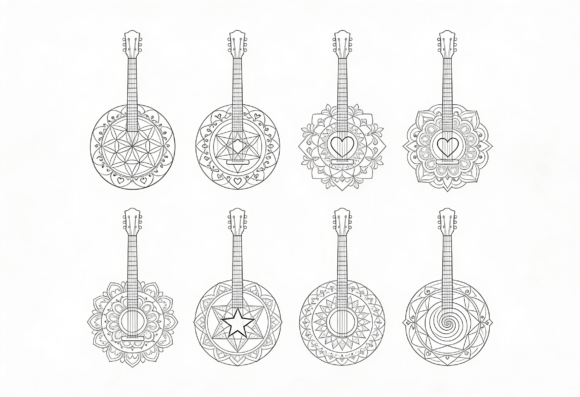
Mandala Guitar Banjo Coloring Pages: Graphics for Crafts-Driven Branding
As a brand designer who’s developed visual identities for over 40 local businesses—from artisanal candle studios in Asheville to family-run bakeries in Portland—I recently evaluated Mandala Guitar Banjo Coloring Pages for a real-world project: rebranding a small-batch botanical skincare line launching its first line of seasonal gift sets. My goal wasn’t just to assess aesthetics—it was to determine whether this graphic design asset could strengthen their brand identity, elevate shelf presence, and support cohesive marketing visuals across packaging, social media, and in-store displays.
A First Impression That Speaks Before You Do
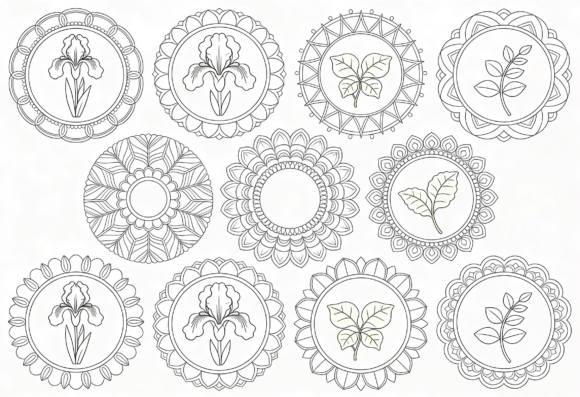
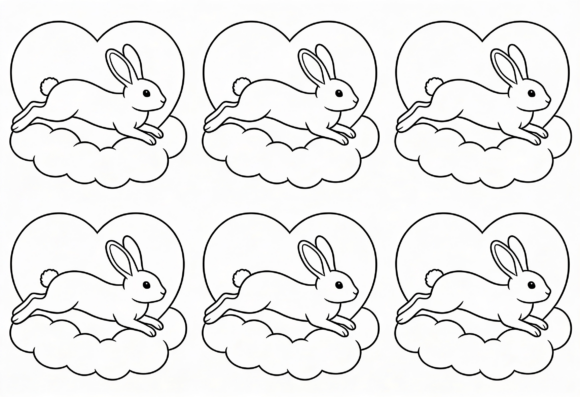
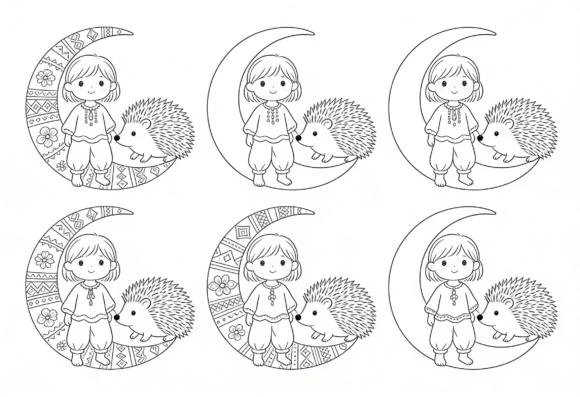
The moment I opened the file suite, I felt the balance: intricate mandala geometry grounded by the warm, organic silhouette of a guitar banjo—neither overly rigid nor chaotic. It reads as handmade but intentional, playful yet refined. This isn’t loud or corporate; it’s quietly confident—ideal for businesses that lead with authenticity: handmade soap makers, indie florists, boutique coffee roasters, or children’s product brands emphasizing creativity and calm. It leans feminine without being cloying, decorative without sacrificing clarity, and artistic without alienating broader audiences. For a local business aiming to stand out on a crowded farmers’ market table or boutique shelf, that tonal precision is gold.
Where This Graphic Design Asset Earns Its Keep
Mandala Guitar Banjo Coloring Pages shines brightest where visual storytelling meets tactile experience. In our skincare project, we used the SVG version to create elegant die-cut accents on kraft paper gift boxes—subtle enough to feel premium, distinctive enough to spark curiosity. We also adapted the PNG (with transparent background) into custom hang tags, layered behind hand-lettered product names—a smart way to add depth without cluttering the hierarchy.
- Packaging design: Works exceptionally well as a foil-stamped motif on matte-finish labels or as a repeating border on jar sleeves.
- Product label: Scales beautifully when isolated as a corner emblem—especially effective beside minimalist typography.
- Social media graphics: The JPG and PNG versions integrate cleanly into Canva templates for Instagram carousels promoting “Creative Self-Care Sundays” or “Local Maker Spotlights.”
- Printable design: Used as a subtle watermark on thank-you cards and recipe inserts included with bakery orders—reinforcing brand continuity without overwhelming content.
- Seasonal campaign visuals: Paired with autumnal palettes, the motif became central to limited-edition candle launch posters and printable event signage for a local craft fair booth.
Real Business Impact: Beyond Decoration
This isn’t just clipart—it’s a functional tool for professional branding. When applied thoughtfully, Mandala Guitar Banjo Coloring Pages strengthens several critical touchpoints:
- Stronger first impression: Customers spend under 3 seconds scanning a product. A well-placed, high-quality motif signals care and intentionality before they read a single word.
- Better product recognition: Consistent use across stickers, labels, and web banners builds visual memory—key for repeat buyers at pop-up markets or local shops.
- Clearer visual hierarchy: As a decorative brand element, it frames key information rather than competing with it—especially when sized and spaced intentionally.
- More consistent brand identity: Because it’s delivered in vector (SVG, AI, EPS) and raster formats, it holds up across applications—from 2-inch sticker die-cuts to 48-inch trade show banners.
- Improved customer trust: Precision in line weight and spacing communicates professionalism—vital for handmade businesses often perceived as “less polished.”
Where to Use It—And Where to Pause
This graphic design asset excels in accent roles: hero graphics, packaging borders, social media backgrounds, and decorative brand elements. It adds warmth and character without demanding center stage.
Use it carefully—or avoid altogether—in contexts where clarity, legibility, or restraint is non-negotiable:
- Formal corporate branding (e.g., law firms, financial advisors)
- Very small product labels (<5mm height) where fine mandala lines may blur or print inconsistently
- Crowded packaging layouts already dense with ingredients, certifications, or legal text
- Backgrounds with low contrast (e.g., light gray on white), which mute its delicate detail
- Luxury minimalist brands relying on negative space and monochrome palettes
Practical Brand Designer Notes for Small Business Owners
If you’re considering Mandala Guitar Banjo Coloring Pages for your local business, here’s what I tested—and recommend you do too:
- Test on real packaging mockups—not just digital previews. Print a 1:1 label sample to check how fine lines hold up on your chosen material.
- Check black-and-white usage: Does it retain character when printed in one color? (It does—especially the SVG and EPS files.)
- Preview on small labels: Zoom in at 200%—do inner mandala details remain crisp?
- Test with your brand colors: Layer it over your primary palette swatches. Does it harmonize—or clash with undertones?
- Compare with competitor packaging: Does it help you stand out, or blend in?
- Review PNG transparency: Ensure clean edges for seamless layering in Canva or Adobe Express.
- Inspect SVG editability: Can you easily recolor paths or isolate the banjo vs. mandala components? (Yes—the layers are well-organized.)
- Test beside your fonts: Try it next to serif, sans serif, script, and display typefaces. It pairs especially well with soft serifs and airy sans serifs.
- Confirm commercial licensing: Verify the license permits use on physical products, client work, and resale—critical for handmade businesses and packaging designers.
For creative entrepreneurs building a local business from scratch—or refining an existing brand—Mandala Guitar Banjo Coloring Pages delivers more than decoration. It’s a versatile, production-ready graphic design asset that supports small business branding with quiet confidence. When paired with thoughtful strategy, it becomes part of your story—not just your signage.