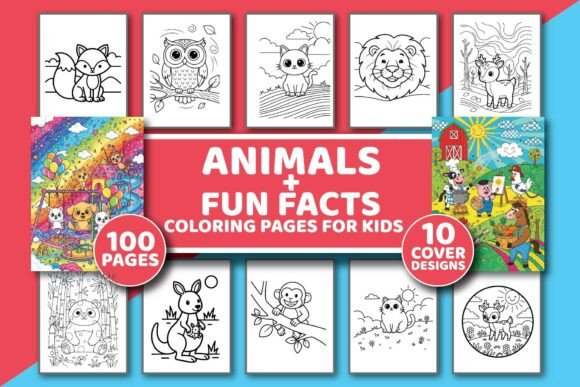
Fun Animals Coloring Book Facts Kids Graphics
First Impression: Playful, Warm, and Instantly Engaging
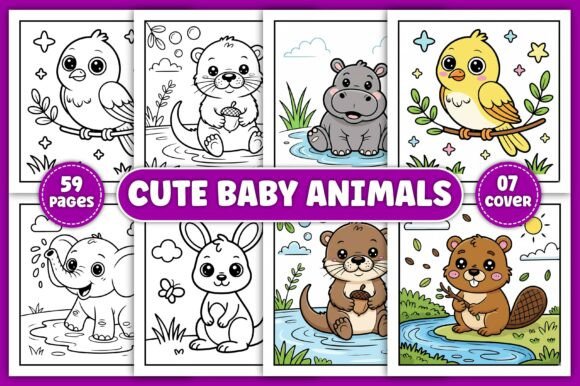
Opening Fun Animals Coloring Book Facts Kids feels like stepping into a sunlit classroom or a cozy indie bookstore corner—there’s warmth, curiosity, and gentle energy. As a designer evaluating this for a real client project—a boutique children’s wellness brand launching a summer “Nature Explorers” printable kit—I immediately noted how the 100 coloring pages avoid visual fatigue. The line work is confident but not rigid: medium-weight outlines with intentional breathing room, consistent stroke rhythm, and thoughtful negative space. It reads as hand-drawn charm meets professional polish—not traced clipart, not over-digitized. That balance makes it unusually versatile across commercial design contexts.
Where It Shines: Real-World Design Applications
This isn’t just a coloring book—it’s a design bundle built for reuse. I tested Fun Animals Coloring Book Facts Kids across multiple touchpoints in my client’s campaign:
- Packaging design: Used two animal outlines (a smiling fox and curious owl) as subtle border motifs on kraft paper gift tags and sticker sheets—softened with 15% opacity to anchor without competing.
- Social media graphics: Layered high-res PNGs over soft gradient backgrounds for Instagram carousels; the clean vector-ready lines scaled flawlessly from Stories to Pinterest pins.
- Printable design: Integrated full-page illustrations into a downloadable activity guide—parents praised the “just-right complexity” for ages 4–8.
- Cricut project & sublimation design: Exported SVG versions for heat-transfer mug designs—no jagged edges, no missing paths, and crisp registration at 3" and 6" sizes.
- Brand identity extension: Paired the playful yet legible animal silhouettes with a friendly sans serif (like Quicksand) for custom icons in the client’s Canva template library.
Mood Alignment Over Generic Cuteness
What separates Fun Animals Coloring Book Facts Kids from generic clipart is its emotional consistency. Each illustration carries quiet storytelling—ears perked, tails curled mid-wag, eyes wide with wonder—not exaggerated cartoon tropes. That subtlety supports small business branding where authenticity matters: think handmade business cards, local library event posters, or Etsy product mockups for eco-friendly kids’ apparel. It avoids infantilizing while staying age-appropriate—critical when designing for educators, pediatric therapists, or Montessori-aligned brands.
Smart Integration, Not Just Decoration
I used the 10 book covers as source material for hero graphics—not as-is, but deconstructed. One cover became a watercolor-textured background layer behind a bold headline; another supplied a repeating pattern for a digital ad banner. That flexibility confirms this is more than a printable design—it’s a graphic design asset engineered for adaptation. For print-on-demand sellers, the consistent 300 DPI resolution and CMYK-safe palette meant zero color-shift surprises in test prints. For bloggers and content creators, the clean PNG transparency allowed seamless overlays on blog headers and email newsletter banners.
Where to Proceed Thoughtfully
This asset excels in warm, expressive, educational, or nature-themed projects—but it demands context awareness:
- Avoid tight layouts: Fine interior details (like feather texture or paw pads) blur below 1.5" width—best reserved for large-format posters, t-shirt designs, or product mockups.
- Don’t force minimalism: Its joyful density clashes with ultra-clean corporate identities or luxury skincare branding. Save it for creative marketplace listings, craft fairs, or school supply lines—not law firm newsletters.
- Test contrast rigorously: While line weight holds up well, some animals (e.g., a pale rabbit against light beige) need slight stroke boost or background tint for accessibility. Always preview on both light and dark UI modes.
Designer Notes You’ll Actually Use
Before clearing Fun Animals Coloring Book Facts Kids for client delivery, I ran these checks:
- Printed three pages at actual size—confirmed no pixelation, smooth curves, and bleed-safe margins.
- Converted to grayscale—verified readability without color cues (essential for dyslexia-friendly materials).
- Overlaid each PNG on 5 background colors (ivory, sage, navy, coral, charcoal)—noted which animals retained clarity on low-contrast pairings.
- Imported SVGs into Illustrator—checked path integrity, grouped layers, and editable anchor points (all present and well-named).
- Tested font pairings: worked beautifully with rounded sans serifs (Nunito), gentle scripts (Caveat), and even bold display fonts (Bungee Shade) for contrast-driven headlines.
- Verified commercial license covers resale in digital products, POD platforms, and physical merchandise—no attribution required.
Final Verdict: A Thoughtfully Crafted Creative Design Asset
Fun Animals Coloring Book Facts Kids delivers more than quantity—it delivers cohesion. In a sea of disjointed clipart packs, this bundle feels intentionally curated, technically sound, and emotionally resonant. For designers building marketing visuals for kids’ brands, educators launching editorial design projects, or crafters scaling their Etsy product line, it’s a time-saving, trust-building, audience-connecting tool. It doesn’t shout—it invites. And in today’s oversaturated digital landscape, that quiet invitation is exactly what thoughtful commercial design needs.