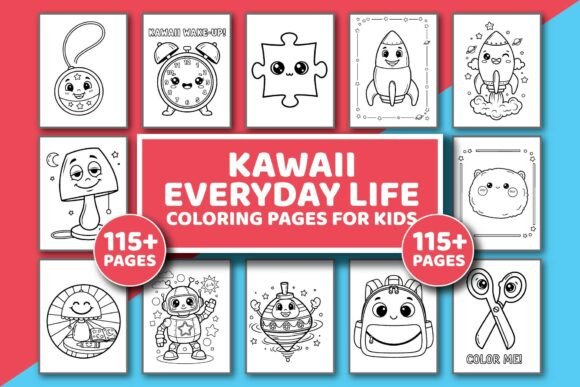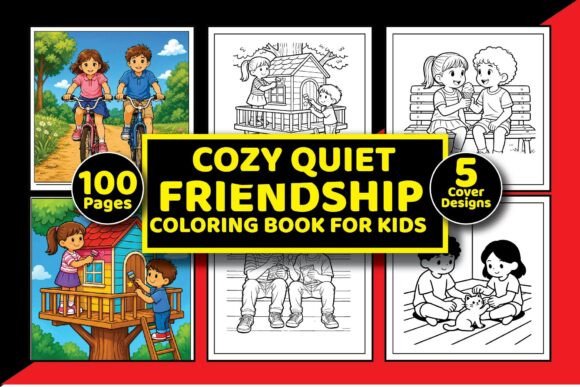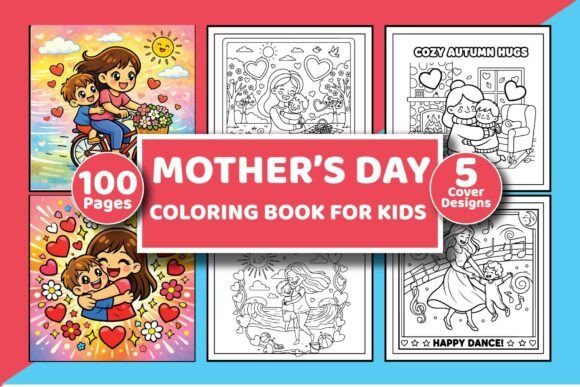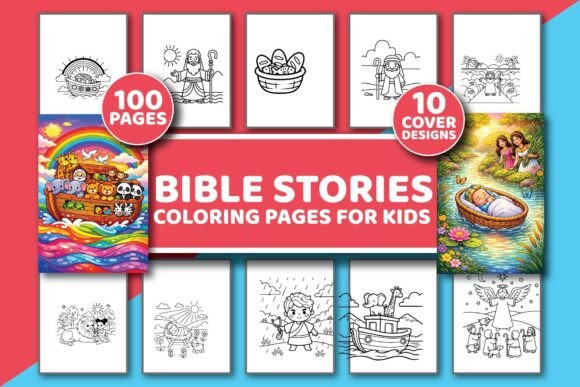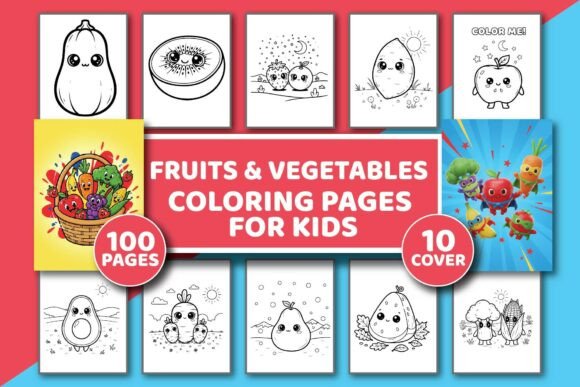
Fruits Veggies Coloring Pages for Kids: Graphics & Coloring Pages Amp
As a graphic designer who’s built brand identities for organic baby food startups, launched seasonal printable collections for indie stationery brands, and crafted social-first marketing visuals for small-batch crafters, I recently evaluated Fruits Veggies Coloring Pages for Kids for a real client project: a boutique farm-to-table preschool program launching a summer “Grow & Glow” activity kit. My goal wasn’t just to see if it’s “cute”—it was to determine whether this design bundle delivers functional, commercially viable, on-brand creative assets that hold up across print, digital, and product applications.
First Impression: Playful, Warm, and Purposefully Unpolished
The moment I opened the preview files, the mood landed clearly—friendly, approachable, and gently educational. These aren’t hyper-stylized vector icons or minimalist line art; they’re expressive, hand-drawn–inspired illustrations with soft outlines, generous white space, and intentional imperfections (slight wobbles in stems, uneven leaf edges). That warmth makes Fruits Veggies Coloring Pages for Kids ideal for handmade businesses, local wellness brands, Montessori-aligned educators, and Etsy sellers targeting conscious parents. It avoids the sterile feel of AI-generated clipart while staying far more scalable and consistent than scanned hand sketches.
Where This Graphic Design Asset Truly Shines
In practice, Fruits Veggies Coloring Pages for Kids excels where authenticity and emotional resonance matter most:
- Printable design: The 100 pages scale beautifully from A4 to 12×12 scrapbook size—crisp at 300 DPI, with clean interiors that leave room for crayons, markers, or watercolor washes.
- Packaging design: The 10 book covers work instantly as front-of-box visuals for activity kits, subscription boxes, or retail-ready coloring books—especially when layered over kraft paper or recycled cardstock mockups.
- Social media graphics: Isolated fruits and veggies (think a single smiling carrot or a cluster of berries) pop in Instagram carousels, Pinterest pins, and Canva templates—especially against soft pastel or earth-tone backgrounds.
- Cricut project and sublimation design: PNGs with transparent backgrounds cut cleanly on vinyl; SVG versions (if included) allow easy recoloring for tote bags, mugs, or kids’ apparel—no jagged edges or anti-aliasing issues.
- Brand identity support: While not logo-ready, these illustrations serve powerfully as secondary brand elements—think pattern repeats on labels, background textures for email headers, or playful accents in editorial design for newsletters or blog posts.
Real-World Use Cases That Just Worked
For our preschool client, we used three apple illustrations as repeating motifs on reusable snack bag tags (SVG), pulled one watermelon page into a large-format poster for their sensory garden wall, and embedded a simplified strawberry graphic into their Canva template for parent-facing event flyers. Each time, the asset reinforced the brand’s core values—joyful learning, natural simplicity, tactile engagement—without requiring custom illustration time or budget.
Where Caution Is Essential
This isn’t a universal-fit graphic design asset. It needs thoughtful placement:
- Avoid using full coloring pages in logo design or product labels where clarity and scalability are non-negotiable—details like tiny seeds or vine tendrils vanish below 1.5 inches.
- Don’t layer over busy photographs or complex gradients—Fruits Veggies Coloring Pages for Kids relies on contrast and breathing room. It loses visual trust in low-contrast designs or minimalist branding systems built around strict grid discipline.
- Resist dropping it directly into corporate annual reports, fintech dashboards, or B2B SaaS landing pages. Its emotional appeal is deeply child-centric and warm—it doesn’t translate to formal or technical contexts.
Designer Notes You Can’t Skip Before Client Use
Before clearing Fruits Veggies Coloring Pages for Kids for commercial use, I always run this checklist:
- Test all key assets in black and white—does the linework stay legible? (Critical for coloring pages and print-on-demand.)
- Preview PNGs on both light and dark backgrounds—check for subtle fringing or transparency bleed.
- Scale down to 24px and 48px: does the core shape remain recognizable? (Vital for app icons or tiny sticker designs.)
- Place on realistic product mockups—tote bag, mug, notebook cover—to assess proportion, spacing, and emotional fit.
- Confirm file formats: Are SVGs truly vector-editable (not raster-in-SVG wrappers)? Are PNGs saved with alpha transparency, not matte?
- Test typography pairings: It harmonizes best with rounded sans serifs (like Quicksand), friendly scripts (like Pacifico), or gentle display fonts—not tight serifs or ultra-thin modern typefaces.
- Verify the commercial license: Does it explicitly permit use in client projects, digital products, and print-on-demand? Never assume.
Final Verdict: A Strategic Creative Asset, Not Just Clipart
Fruits Veggies Coloring Pages for Kids isn’t filler—it’s a focused, mood-driven design bundle that solves specific visual problems for small business branding and family-focused marketing. When aligned with the right audience (parents seeking screen-free creativity, educators building thematic units, makers designing kid-safe merchandise), it adds instant charm, consistency, and commercial flexibility. For designers juggling tight timelines and authentic storytelling, it’s less about “adding color” and more about embedding intention—playful learning, natural goodness, and hands-on joy—directly into the visual language of a brand. Just remember: treat it like a collaborator, not a shortcut. Test it, scale it, license it, and let it earn its place—not just fill space.