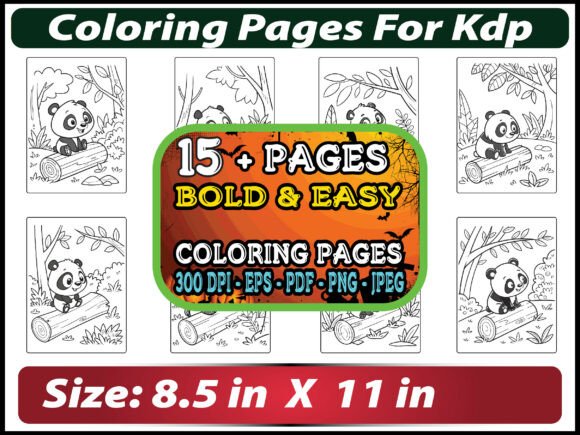
Cut Panda Coloring Pages for Kids V-1: Graphics & Coloring Pages Amp
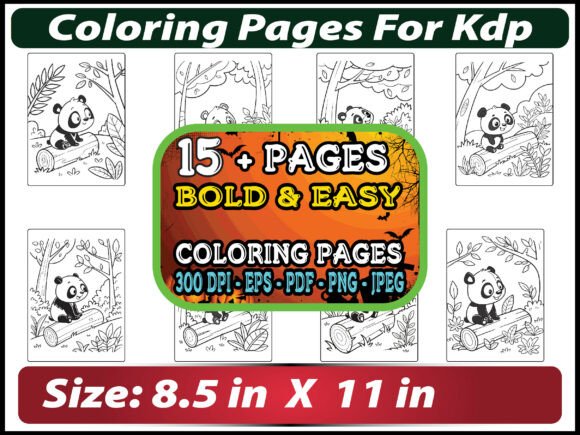
As a brand designer who’s developed visual systems for over 40 local businesses—from artisanal candle studios in Portland to family-run bakeries in Austin—I opened Cut Panda Coloring Pages for Kids V-1 expecting playful line art. What I found was something more intentional: clean, high-contrast scissor-skill outlines with gentle curves, subtle Easter motifs woven in without cliché, and a quiet sense of warmth that reads as both handmade and thoughtfully modern. It doesn’t scream “cartoon”—it whispers “inviting,” “carefully made,” and “child-centered but brand-smart.” That balance is rare in coloring page assets—and exactly why it works so well for real small business branding.
A Local Bakery Project: Where Cut Panda Coloring Pages for Kids V-1 Earned Its Place
Last spring, I collaborated with Sunbeam Hearth Bakery, a neighborhood sourdough and kids’ treat shop launching an Easter-themed “Egg & Dough” mini-collection. Their packaging needed to feel joyful but not juvenile—whimsical enough for kids’ cookies, grounded enough for adult customers browsing the farmers’ market stall. We used Cut Panda Coloring Pages for Kids V-1 as the foundational graphic design asset—not as standalone coloring sheets, but as editable vector elements for packaging accents, hang tags, and social media banners.
The Ai and EPS files gave us full control: we scaled the panda outline to 1.2 cm tall for the corner of compostable cookie bags, rotated one element 15° for dynamic flow on thank-you cards, and layered two simplified motifs behind hand-lettered product names on shelf talkers. Because the lines are crisp and consistent—not pixelated or uneven—the print output held up beautifully on uncoated kraft paper, even at 8 pt type size. That’s not guaranteed with most clipart-style downloads.
Where This Graphic Design Asset Adds Real Brand Value
Cut Panda Coloring Pages for Kids V-1 strengthens local business presentation in ways that go beyond decoration:
- Stronger first impression: Used as a border motif on product labels or menu headers, it signals approachability and care—key for boutique owners and handmade businesses building trust in crowded markets.
- Better product recognition: When repeated across stickers, packaging, and Instagram Stories, it becomes a subtle but ownable visual cue—especially effective for seasonal campaigns like Easter, back-to-school, or summer treats.
- Clearer visual hierarchy: Its open-line structure creates natural breathing room around text. We paired it with a warm serif font for Sunbeam’s “Honey Butter Biscuits” label—no competing density, just gentle framing.
- More consistent brand identity: Unlike generic Canva templates, the SVG and AI files allow precise color matching to your palette—whether you’re using muted sage for a skincare brand or bright tangerine for a children’s toy shop.
- Improved customer trust: Clean vector art signals professionalism. Customers subconsciously associate crisp, scalable graphics with brands that invest in quality—even on low-cost items like printed recipe cards or bakery bag seals.
Best Uses for Real Small Business Projects
This isn’t just a digital product—it’s a versatile piece of commercial design infrastructure. In practice, Cut Panda Coloring Pages for Kids V-1 excels when deployed in:
- Product labels and jar seals (especially for kids’ snacks, bath bombs, or organic baby food)
- Packaging accents—corner flourishes on gift boxes, borders on soap wraps, or repeating patterns on tissue paper
- Hero graphics for website banners and email headers (SVG ensures sharpness on all devices)
- Decorative brand elements: watermarks on printable recipe cards, background textures for price lists, or frame elements for photo-heavy social posts
- Seasonal campaign visuals: Easter egg hunts, spring pop-ups, or “kids’ corner” signage in boutiques and florists
- Thank-you cards and packaging inserts for handmade businesses seeking warmth without clutter
Where to Use It Thoughtfully
Like any strong design asset, Cut Panda Coloring Pages for Kids V-1 has boundaries. Avoid placing it:
- In formal corporate branding—its friendly tone clashes with legal services or finance firms
- On very small labels (<1 cm height) where fine line detail disappears in print
- Over busy backgrounds or ingredient-heavy layouts where contrast suffers
- In luxury minimalist contexts—think black-and-white apothecary skincare—where its illustrative nature competes with restraint
- Where decoration overshadows essential information (e.g., allergen statements, net weight, or certifications)
Practical Brand Designer Notes You’ll Want to Apply
Before integrating Cut Panda Coloring Pages for Kids V-1 into client work or your own small business branding, run these checks:
- Test it on real packaging mockups—not just screen previews—to assess scale, spacing, and tactile impact
- Check black-and-white usage: Does the line weight hold up in grayscale printing? (It does—this set uses consistent 0.75 pt strokes.)
- Preview it beside your brand fonts: Does it harmonize with serif, sans serif, script, and handwritten styles? (We found it pairs especially well with warm serifs and rounded sans fonts.)
- Confirm commercial licensing: This asset includes full commercial rights—critical for physical product sales, wholesale labels, and client deliverables
- Inspect SVG editability: Open in Illustrator or Figma—can you recolor paths individually? (Yes—the layers are cleanly organized.)
- Compare against competitor packaging: Does it differentiate your brand while fitting local market expectations?
- Review PNG transparency: For social media overlays and web use, ensure clean edges and no stray pixels
For local business owners, handmade sellers, and creative entrepreneurs building authentic brand presence—Cut Panda Coloring Pages for Kids V-1 isn’t filler. It’s a precision-crafted graphic design asset that supports storytelling, builds recognition, and elevates everyday touchpoints—from the sticker on a candle jar to the banner above a farmers’ market tent. When chosen intentionally and applied with craft, it helps small businesses look less like startups—and more like beloved neighborhood institutions.