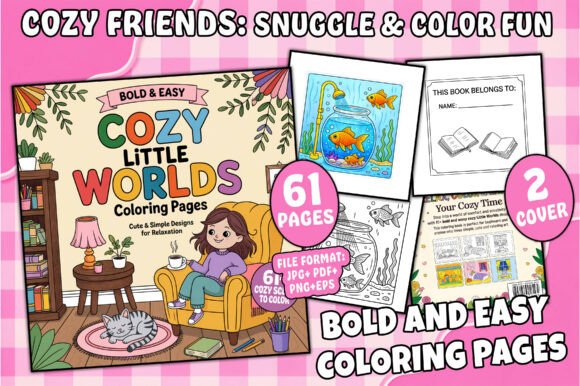
Cozy Little Worlds Coloring Pages
A Designer’s First Glance: Quiet Charm, Not Clutter
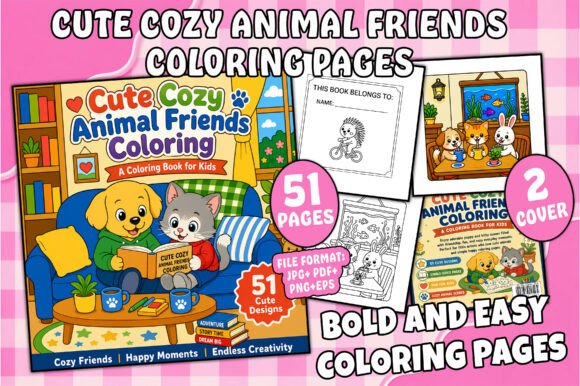
Opening Cozy Little Worlds Coloring Pages, I didn’t see “busy” — I saw breathing room. These 51 abstract pattern pages don’t shout; they invite slow looking. Think layered organic shapes, soft geometry, gentle repetition — not rigid symmetry, but a hand-guided rhythm. There’s warmth in the line weight, variation in the spacing, and an intentional lack of over-detail. As an embroidery designer who’s stitched everything from hyper-realistic florals to minimalist monograms, this feels like a rare find: artwork that translates *naturally* into stitch without fighting the medium.
Real Project Test: A Linen Tote Bag for a Local Bookstore Pop-Up
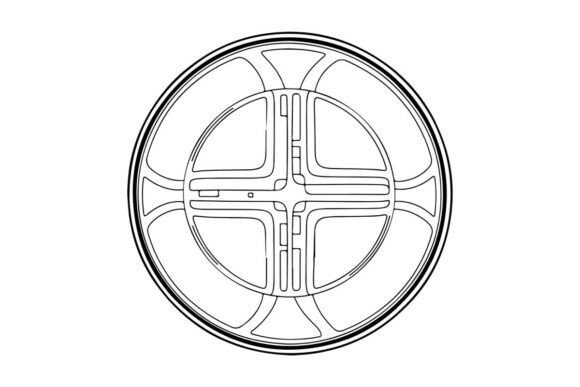
Last week, I prepped a custom embroidered linen tote for a neighborhood indie bookstore’s holiday launch — their ask? “Something quiet but memorable. Not cutesy. Not corporate.” I pulled up Cozy Little Worlds Coloring Pages, chose one with a centered medallion motif and subtle outer frame, and digitized it at 4.2" wide. The result? Clean satin-stitched outlines, open fill-stitch zones that let the natural texture of the linen peek through, and zero thread nesting or puckering — even on the slightly nubby fabric. Customers paused. They ran fingers over the stitching. One asked, “Is that hand-drawn?” That’s the sign of a design that reads as intentional, human, and thoughtfully scaled — not just “placed.”
Where It Shines (and Where It Needs Thought)
Cozy Little Worlds Coloring Pages works exceptionally well for:
- Custom apparel: Sweatshirt embroidery gains depth without heaviness; the patterns hold up beautifully on mid-weight cotton blends and French terry.
- Baby embroidery: Soft curves and open negative space mean no dense stitch clusters — ideal for delicate onesies and burp cloths where comfort is non-negotiable.
- Embroidered patches: Several motifs scale cleanly down to 2.5"–3" hoops. Their balanced composition avoids awkward cropping on round or square patch borders.
- Kitchen towels & tea towels: The abstract nature reads clearly from across a room, yet holds detail up close — perfect for boutique branding or wedding favors.
- Personalized gifts: Pair a simple monogram with one of the untitled book cover designs (included) for elegant, cohesive stationery or gift wrap — no licensing guesswork if you’re selling finished goods.
But — and this matters — it’s not universally plug-and-play. Use caution with:
- Small hoop sizes under 3": Some border motifs include fine interior linework that may lose clarity or require manual simplification.
- Stretchy fabric: Abstract doesn’t mean forgiving. Looser weaves or knits need extra stabilizer support, especially around curved edges in the design.
- Dark fabric backgrounds: While the line art is crisp, avoid relying solely on black thread on charcoal or navy — test contrast first. Lighter thread colors (ecru, oat, pale sage) often elevate the “cozy” mood better than stark white.
- Curved surfaces (caps, beanies): Stick to central, compact motifs. Avoid wide horizontal bands — they’ll distort.
What It Does for Your Craft Business — Beyond the Stitch
As an Etsy seller and small shop owner myself, I judge digital design assets by how they affect three things: perceived value, customer trust, and workflow efficiency. Cozy Little Worlds Coloring Pages scores high on all three.
It elevates handmade product presentation — customers associate thoughtful abstraction with intentionality, not mass production. That translates directly to willingness to pay a premium. On mockups, it reads as “designed,” not “downloaded.” And because the patterns are varied but tonally consistent, building a cohesive collection (e.g., matching pillow covers + kitchen towels + baby blanket corners) feels intuitive — no style whiplash.
For commercial embroidery projects, the clean lines reduce digitizing time. Fewer jump stitches, logical fill directions, and predictable stitch density mean faster hooping and fewer re-runs. That’s billable time saved — and happier clients when turnaround stays tight.
Practical Notes Every Embroidery Designer Should Check
Before committing to a client project or bulk production:
- Test on scrap fabric first — especially if using textured linen, terry cloth, or lightweight rayon.
- Review stitch density in your embroidery software. Adjust fill angles or density if needed for breathability (baby items) or durability (totes).
- Confirm hoop size compatibility. Some motifs extend near the edge — verify clearance before digitizing.
- Inspect small details at actual stitch size. What looks delicate on screen may vanish in thread.
- Test black-and-white mockups — ensures readability without color reliance.
- Compare light vs. dark fabric backgrounds using real thread swatches, not just screen previews.
- Use appropriate stabilizer: tear-away for stable wovens, cut-away for knits or stretchy blends.
- Verify licensing terms — while Cozy Little Worlds Coloring Pages includes customizable book covers, confirm whether finished physical products (e.g., embroidered pillows sold on Etsy) or digital resale (e.g., as part of a larger embroidery bundle) are permitted under the Graphics license.
Final Thought: Design That Serves the Maker
This isn’t flashy. It won’t trend on social media overnight. But Cozy Little Worlds Coloring Pages is the kind of resource that builds repeat customers, strengthens brand voice, and makes embroidery feel like collaboration — not translation. It respects the material, the machine, and the person holding the finished piece. Whether you’re stitching a single holiday gift or launching a small shop line under Coloring Pages Amp, it’s design that shows up ready to work — quietly, confidently, and with real craft in mind.